
Understanding how demographics affect experiences
Motivation
Makerspaces build more than technical skills they foster confidence, engineering identity, and belonging. Existing self-efficacy scales (SEED, EMSE, ISE, CESES) were designed for broad engineering contexts and don't capture the full process of making. A context-specific instrument was needed to measure student confidence across each phase of a makerspace project.
The MSES will be used to analyses student self-efficacy before and after a makerspace activity. These pre and post measurements will then be correlated with demographic data including gender, first-generation status, and race/ethnicity to understand how student backgrounds shape their self-efficacy and, in turn, their overall makerspace experience.
Phases of the research
Survey students & collect demographic data
Existing scales fall short — build the MSES
Validate MSES across two cohorts
Correlate results with student backgrounds
Collect pre & post self-efficacy data
Phase 2
Phase 3
Phase 4
Phase 5
Phase 1
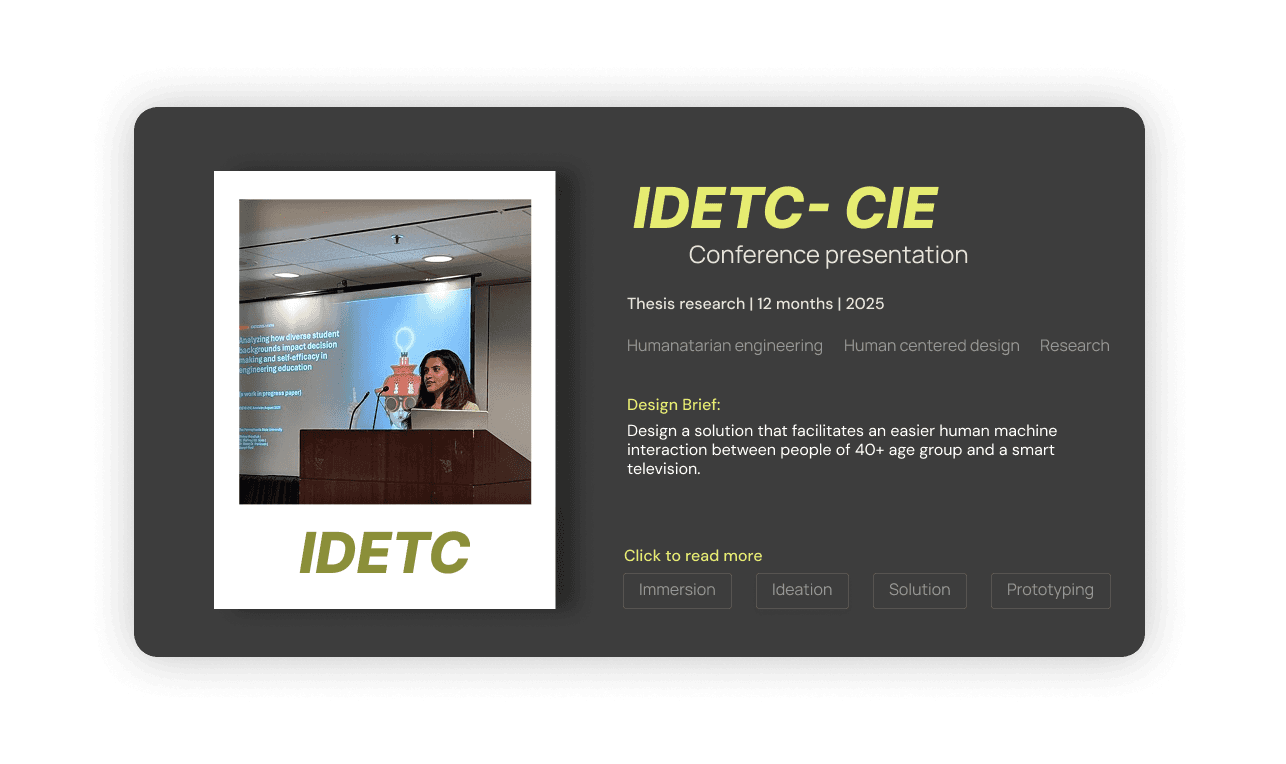
Research presentation
Research Presenter
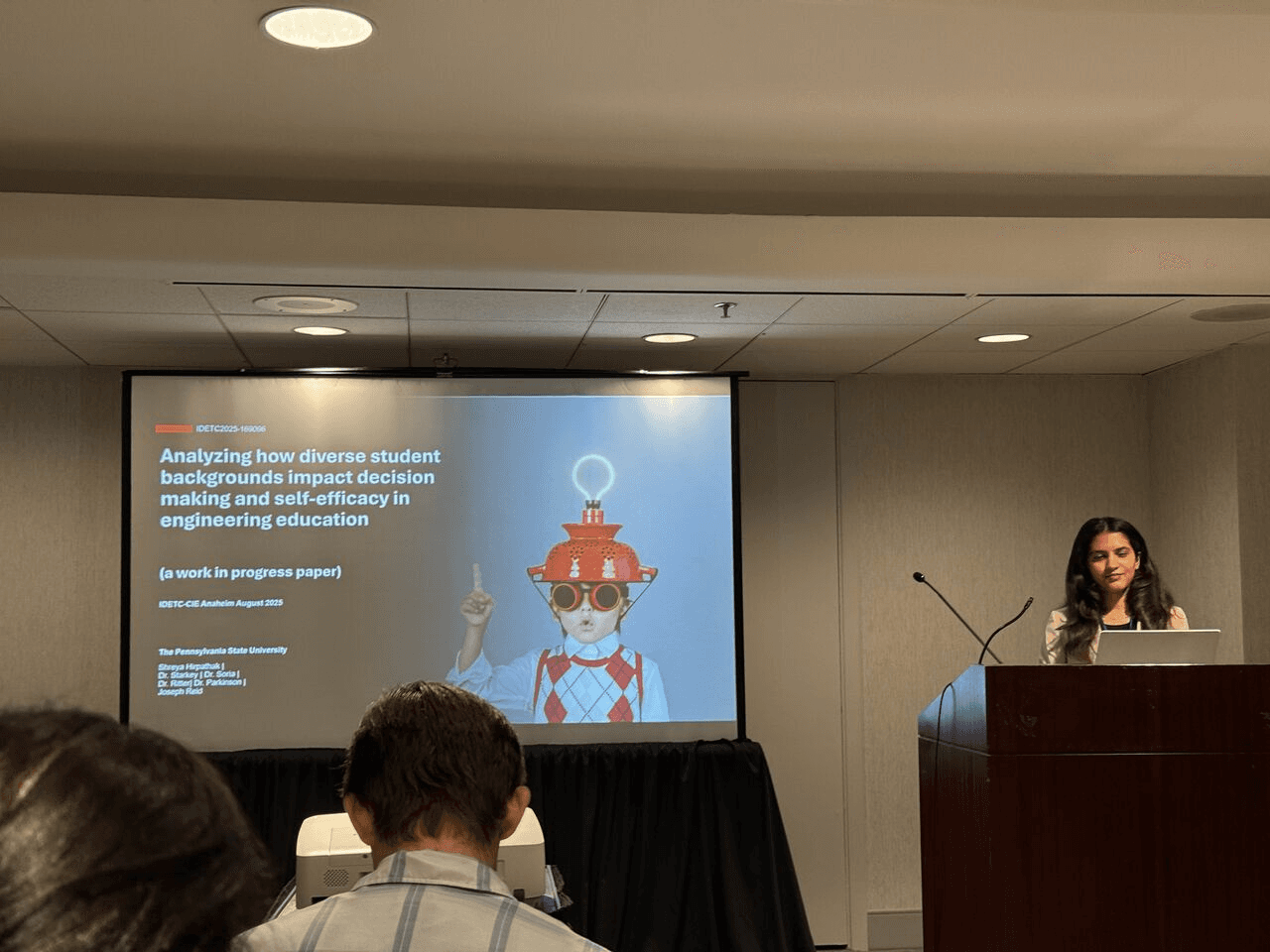
ASME IDETC-CIE Conference | Anaheim, CA
August ‘25
Presented abstract (IDETC2025-169096) examining how students' diverse backgrounds influence design decisions and confidence levels in makerspace environments. Explored strategies for creating more inclusive and equitable experiences for future engineers through a deeper understanding of identity and design behavior.
Research Presenter
CERS symposium
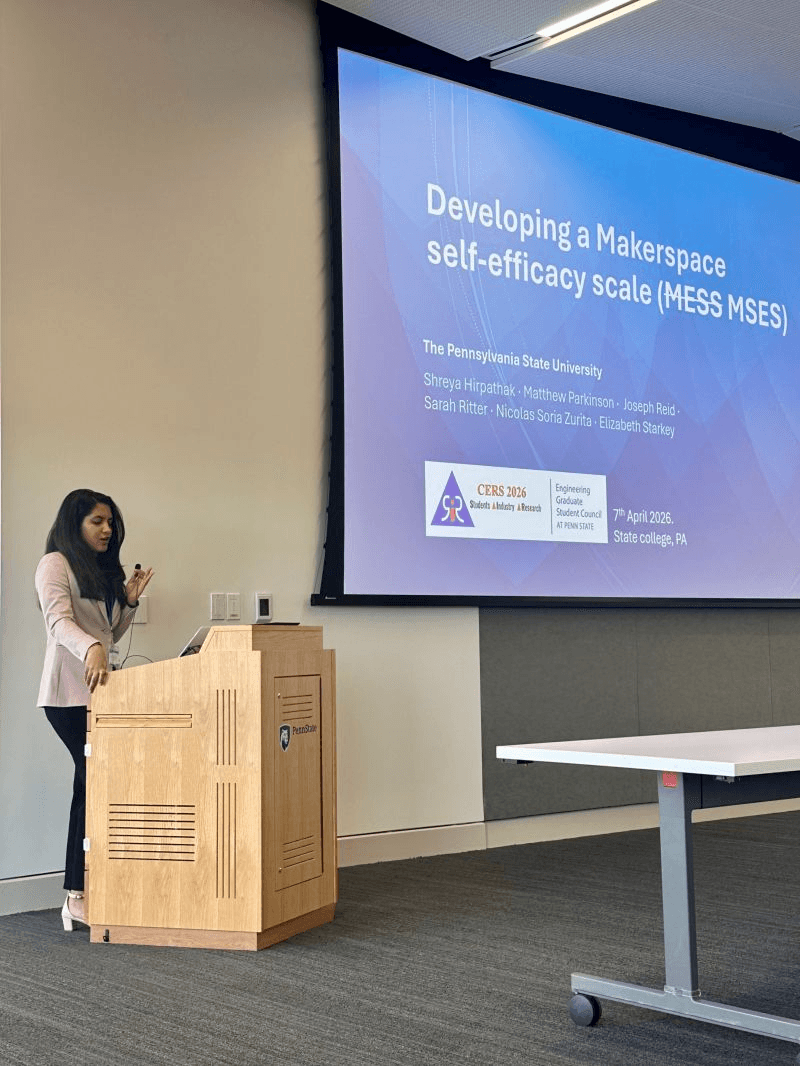
April ‘26
22nd Annual College of Engineering Research Symposium (CERS 2026)Scale Development for Academic Self-Efficacy
User Experience Research
Developed and presented an original measurement scale to assess students' academic self-efficacy, with a focus on how diverse backgrounds shape educational experiences and outcomes.Connected findings to user experience research principles, highlighting how understanding users' backgrounds and lived experiences is foundational to designing inclusive and effective systems.
Time
1.5 years
Total Participants
1,500+
Semesters
3
Survey & demographic segmentation Administered an initial survey to first-year engineering students to collect baseline self-efficacy data alongside demographic information including gender, first-generation status, and race/ethnicity.
Scale development Existing self-efficacy scales were found to be inadequate for makerspace contexts, so a new instrument — the MSES — was developed to capture the full breadth of skills involved in a making project.
Scale validation The MSES was validated using Confirmatory Factor Analysis (CFA) across two independent student cohorts, confirming a stable four-domain structure with strong model fit.
Demographic segmentation & analysis Pre-post self-efficacy shifts will be correlated with student demographic data to understand how background influences confidence and experience in makerspace environments.
Pre and post data collection A second round of data collection captured student self-efficacy both before and after completing the cornerstone makerspace project, enabling direct measurement of change across each domain
“Every great experience starts with understanding the person behind it. This research was my first step in learning how to do that.”